What are peptides, really?
Short chains of amino acids, long list of jobs. A plain-language guide to the molecules behind AminoTails.
By the AminoTails Science Team · Reviewed by our veterinary advisory board* · September 2026
Key takeaways
- Peptides are short chains of amino acids — usually between two and fifty.
- The body uses them as messages: small, specific signals between cells.
- Most peptide research is still early-stage. We say so, and test every lot.
Shorter than a protein
Every protein in your pet’s body is built from the same twenty-odd amino acids, strung together like beads. When the string runs to hundreds of beads and folds into a complex shape, we call it a protein. When it’s short — a handful to a few dozen beads — we call it a peptide.
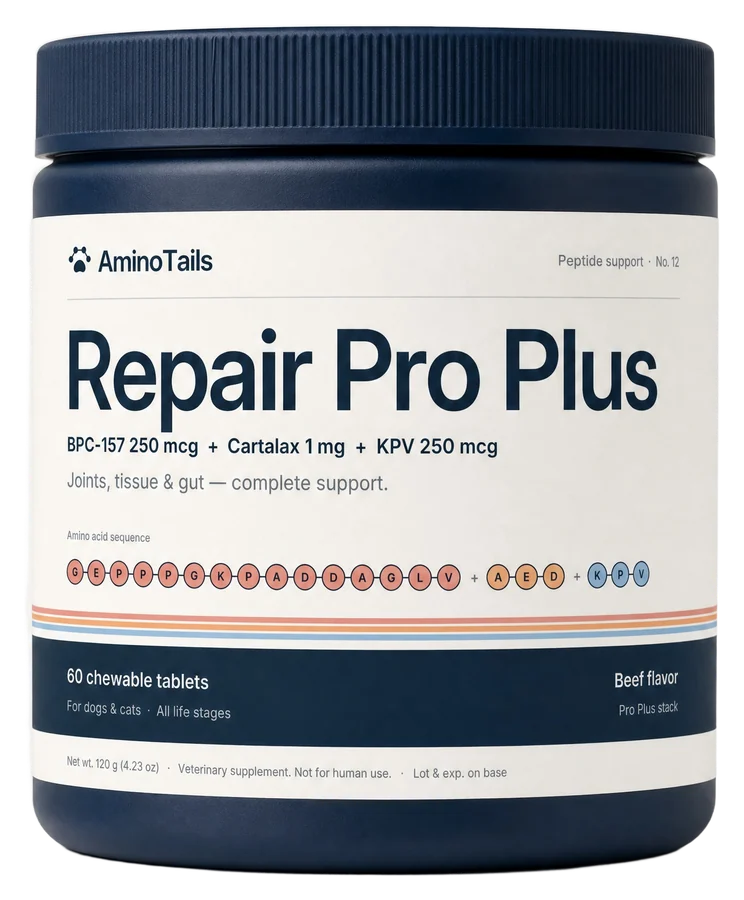
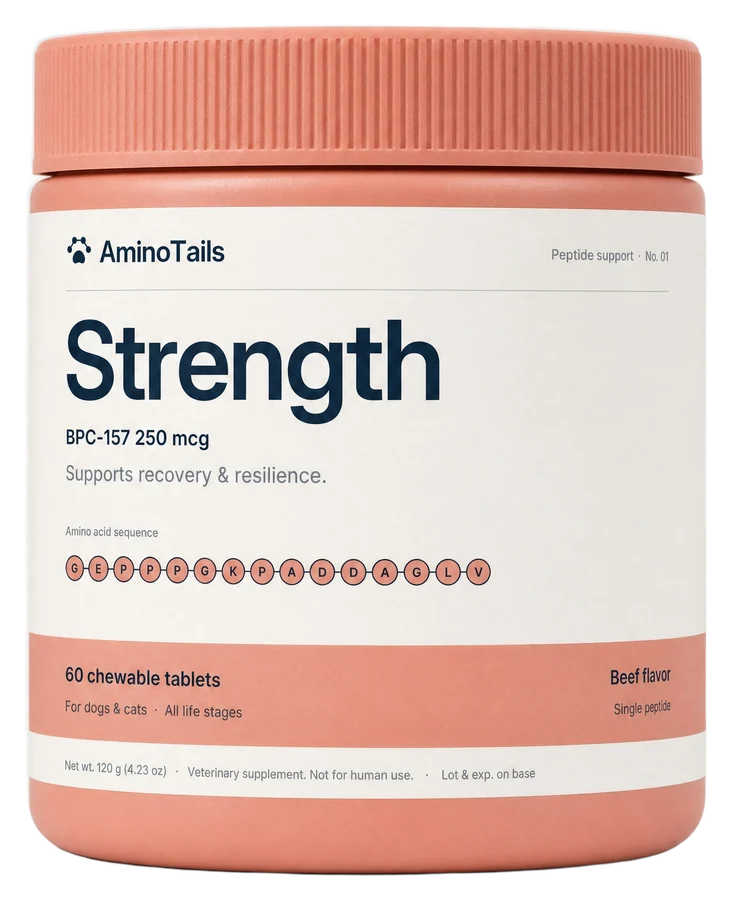
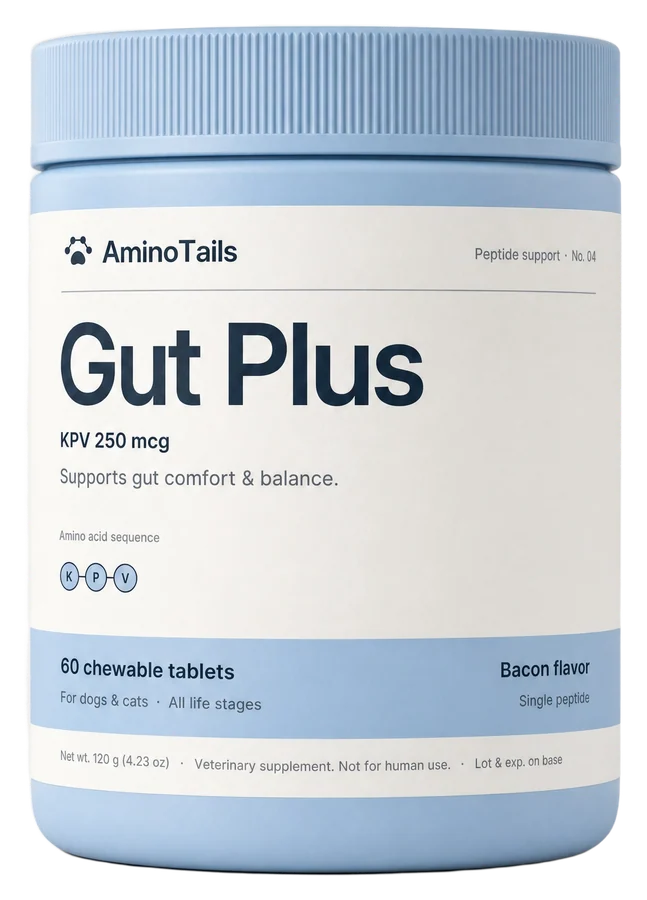
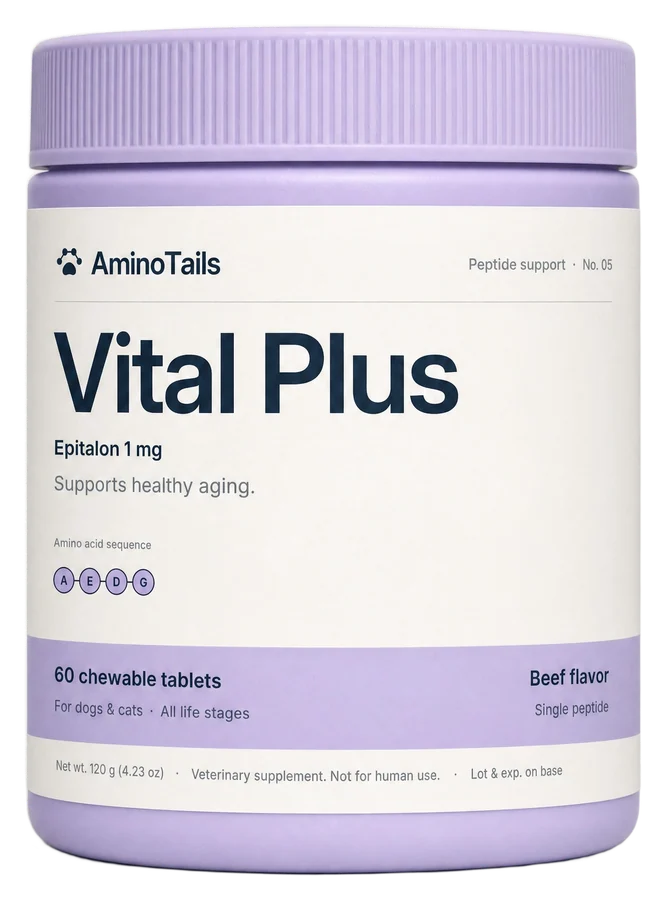
The line is fuzzy, but fifty amino acids is the usual rule of thumb. The six peptides we work with sit well under it: Thymogen is just two amino acids long, KPV and Cartalax are three, Epitalon is four, and BPC-157, the longest, is fifteen.
Peptides are messages
Small size is the point. Many of the body’s own peptides work as signals — short, specific instructions passed from one cell to another. Some act like hormones and travel far; others work locally, nudging nearby tissue to keep doing its normal upkeep.
Because they’re small and specific, peptides tend to carry one clear message rather than many. That’s why we build formulas around single peptides first, and only stack them when two or three messages make sense together.
A protein is a machine. A peptide is closer to a note left on the counter.
Why size matters in a chew
Digestion is designed to take proteins apart. That’s a problem for anything you hope to deliver intact. The very shortest peptides have an advantage: the gut has its own transporter, PepT1, built to carry di- and tripeptides across the lining whole.
Longer peptides need more help, which is why every AminoTails tablet is built around a protected peptide core we call ChewCore™. The flavored outside is for them; the core is for the peptide.
What the research says — and doesn’t
Here’s the honest part. Most of what we know about these peptides comes from laboratory and rodent studies. Controlled studies in dogs and cats are limited, and none of these peptides are approved drugs for animals.
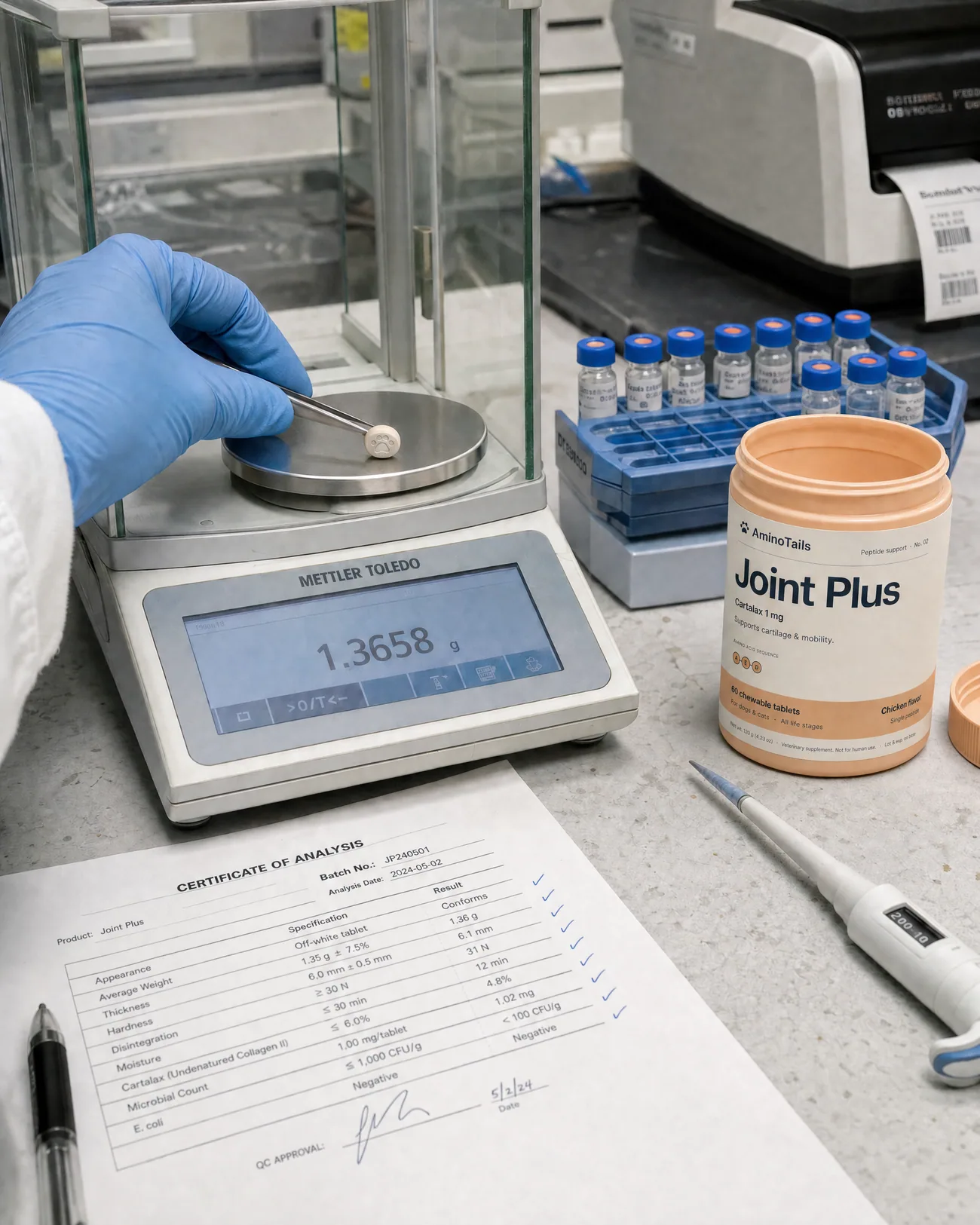
We think that calls for more care, not less. So we formulate for everyday structure-and-function support, dose by weight, keep claims modest, and publish a certificate of analysis for every lot. When the research changes, we’ll tell you.
The bottom line
Peptides are small, specific signals the body already speaks. Used consistently, alongside good food, exercise and regular vet care, they can be one steady part of a pet’s routine. Talk to your veterinarian before starting anything new — especially if your pet takes medication or has a health condition.
This article is for general education and isn’t veterinary advice. Every pet is different — talk to your veterinarian before starting a supplement, especially if your pet is pregnant, on medication or managing a health condition.
Formulas in this story
Shop all formulas
Keep reading
All stories
The stairs are a test: reading your senior dog’s joints
Small changes in how they rise, climb and settle say a lot. Here’s what to watch — and what to ask your vet.

A calm gut is a happy dog
Why the gut lining matters, what “sensitive stomach” really means, and how routine helps.

Night shifts: sleep, rhythm and the aging pet
Restless nights are common in older pets. Understanding their internal clock is the first step.