
Night shifts: sleep, rhythm and the aging pet
Restless nights are common in older pets. Understanding their internal clock is the first step.
By the AminoTails Science Team · Reviewed by our veterinary advisory board* · July 2026

Key takeaways
- Adult dogs sleep twelve to fourteen hours a day; seniors often more.
- Restless nights in older pets are common — and worth mentioning to your vet.
- Light, mealtimes and movement are the anchors of their internal clock.
Their clock, not ours
Dogs and cats run on a circadian rhythm much like ours: a roughly twenty-four-hour cycle set mostly by light. As evening falls, the pineal gland releases melatonin, and the body shifts toward rest.
Their sleep is just arranged differently — more, shorter cycles spread across the day, with lighter sleep that lets them wake quickly.
What changes with age
Many older pets nap more by day and sleep less soundly at night. Some begin to pace, pant or vocalize after dark. Occasional restlessness is normal; a new, persistent pattern can be linked to discomfort or to age-related changes in cognition, and it’s worth raising with your vet.
A good day starts the night before — for them as much as for us.
Anchor the day
- Morning light. A walk soon after waking helps set the clock.
- Regular mealtimes. Food is a powerful timing cue.
- Daytime enrichment. Sniff-walks and puzzle feeders tire the brain, not just the legs.
- A wind-down. Dim lights, a last calm potty break, the same bed in the same quiet spot.
- A night light can help seniors whose eyesight is changing.
Where peptides fit
Vital Plus uses Epitalon, a tetrapeptide modeled on a pineal-gland extract, to support healthy sleep–wake rhythms. Mind Pro pairs it with Pinealon for daytime focus. Both are best given with the evening meal.
When to call the vet
Sudden changes in sleep, night-time panting, confusion, or getting stuck in corners are all worth a visit. Pain is a common, treatable cause of restless nights.
This article is for general education and isn’t veterinary advice. Every pet is different — talk to your veterinarian before starting a supplement, especially if your pet is pregnant, on medication or managing a health condition.
Formulas in this story
Shop all formulas

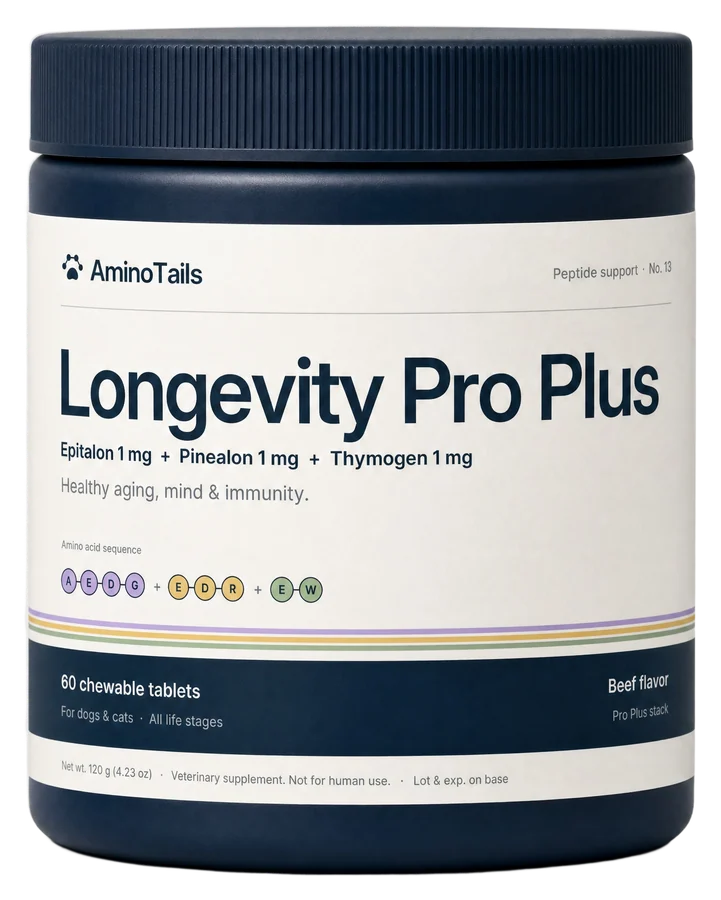
Longevity Pro Plus
$79/mo
Epitalon+Pinealon+Thymogen
Three peptides for aging well: mind, rhythm and immunity.
Keep reading
All stories
Cats are not small dogs
Feline metabolism is its own world. What that means for supplements, dosing and picky eaters.
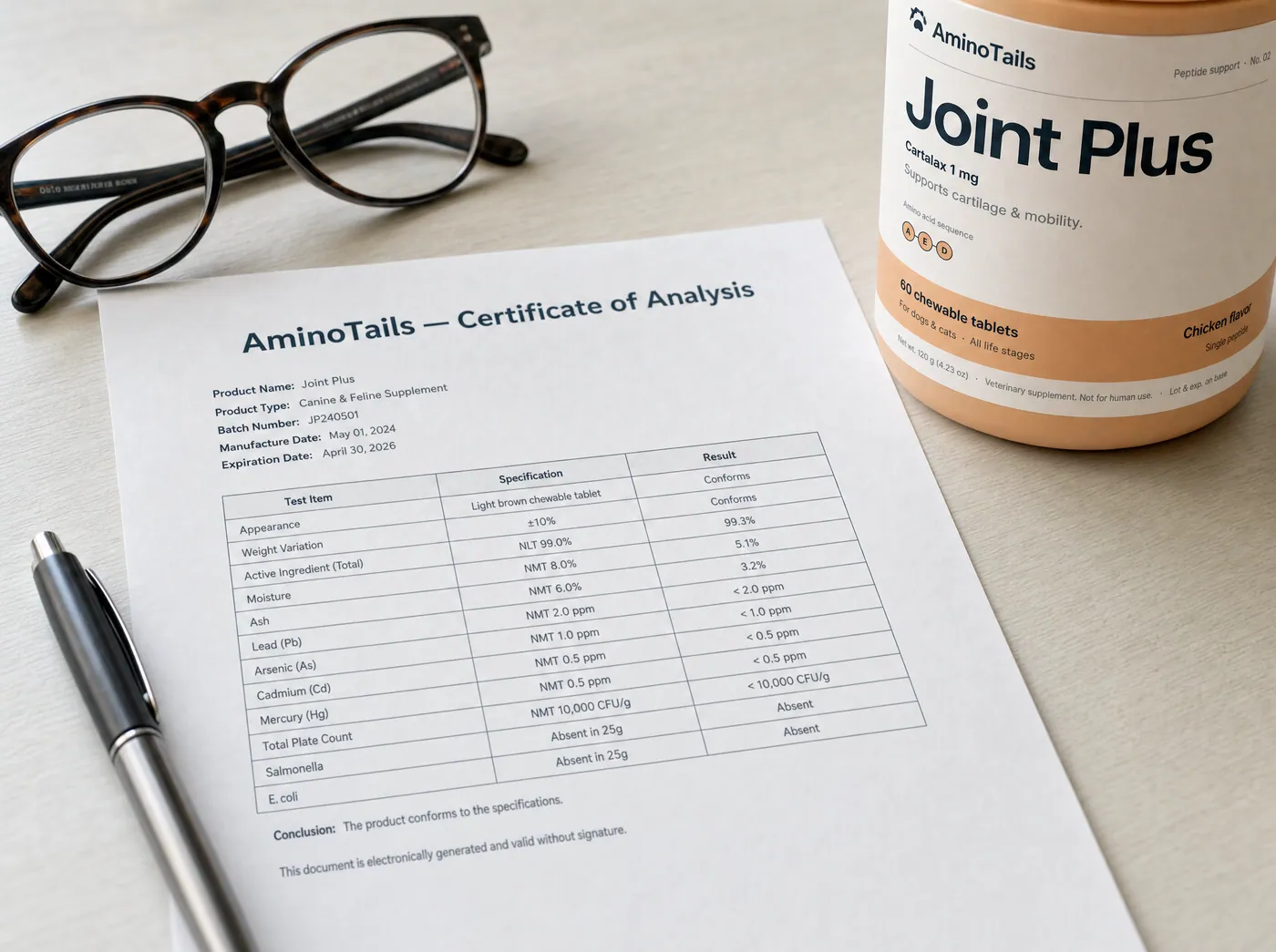
How to read a certificate of analysis
Identity, purity, contaminants: a five-minute guide to the document every supplement should come with.
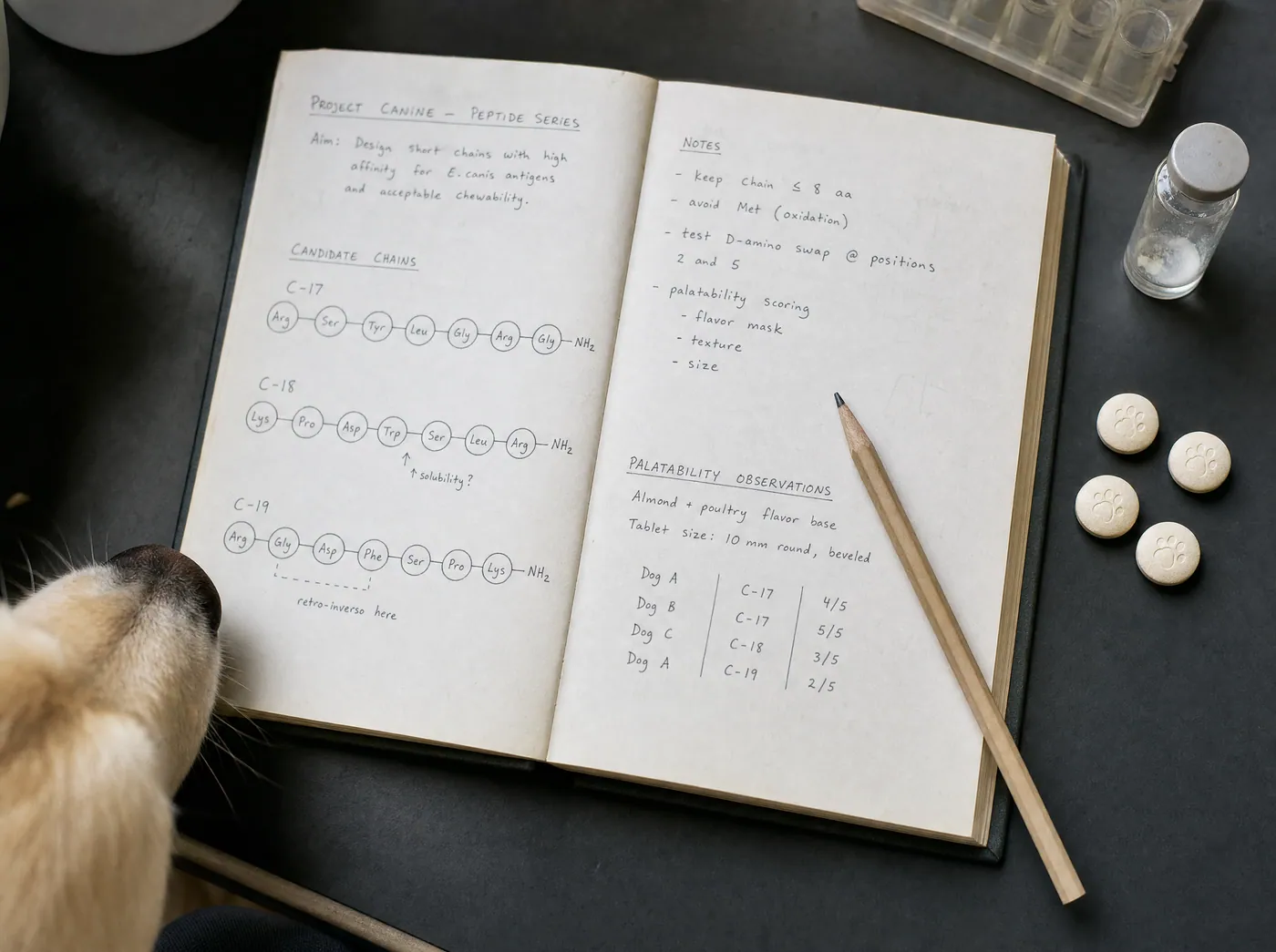
What are peptides, really?
Short chains of amino acids, long list of jobs. A plain-language guide to the molecules behind AminoTails.