



The stairs are a test: reading your senior dog’s joints
Small changes in how they rise, climb and settle say a lot. Here’s what to watch — and what to ask your vet.
By the AminoTails Science Team · Reviewed by our veterinary advisory board* · August 2026
Key takeaways
- The earliest joint changes show up in transitions: rising, climbing, settling.
- Body weight is the single biggest lever you control.
- Film the stairs once a month — it turns a hunch into something your vet can see.
The first signs are quiet
Dogs are good at carrying on. Joint changes rarely arrive as a limp; they arrive as a pause. A slower start after a nap. A beat of hesitation before jumping into the car. A walk that ends a block earlier than it used to.
Other small tells: sitting with one leg kicked out to the side, licking at a wrist or knee, stiffness that eases after a few minutes of moving, or a new reluctance on slippery floors.
The stairs test
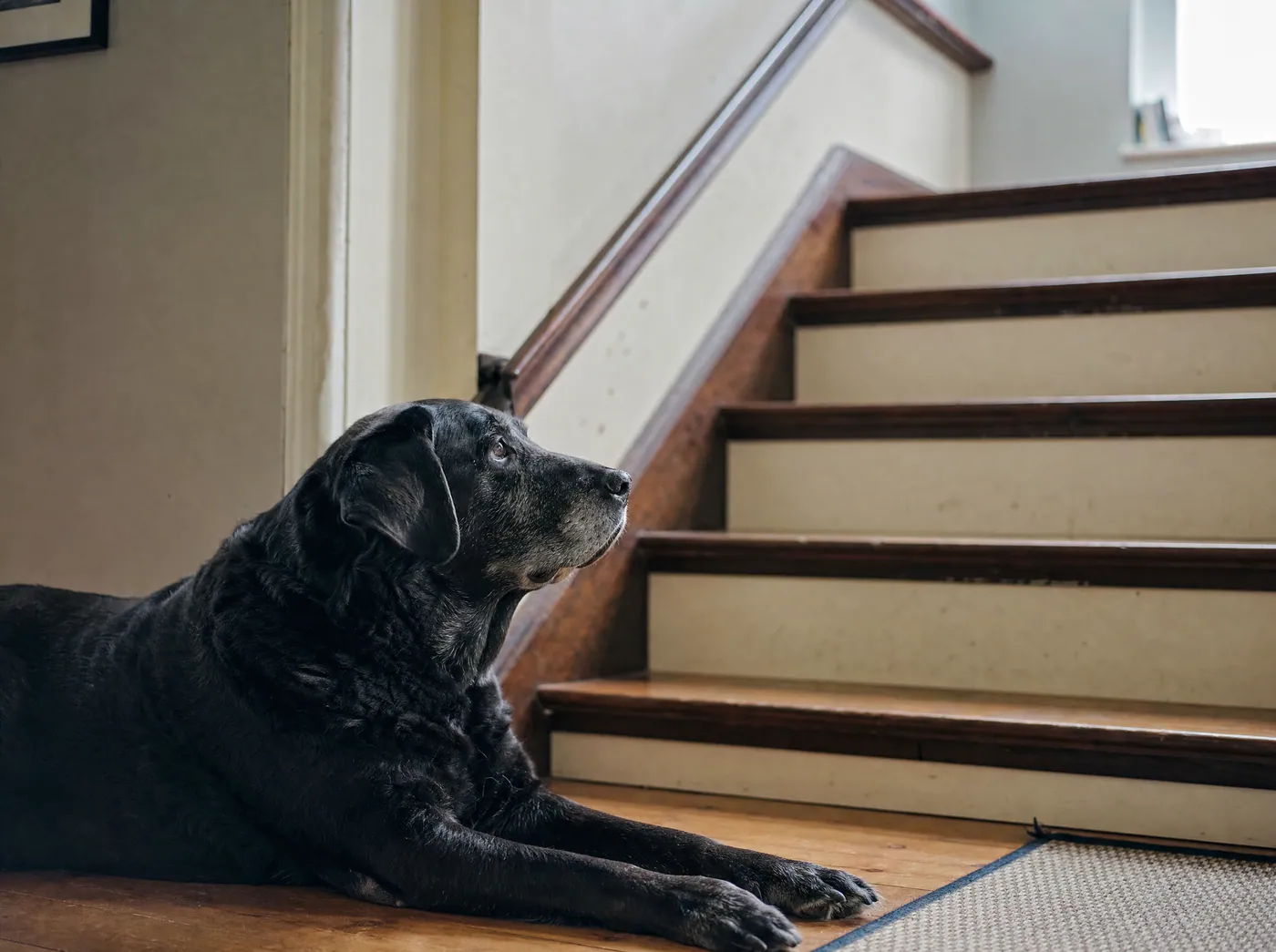
Pick one staircase and film your dog going up it once a month, from the side, at their own pace. Watch for bunny-hopping with both back legs together, pauses on the landing, or a shift in weight to the front.
The point isn’t to diagnose anything at home. It’s to give your vet a clear before-and-after instead of “I think he’s a bit slower?”
Joint changes rarely arrive as a limp. They arrive as a pause.
What helps, day to day
- Keep them lean. In a fourteen-year study of Labrador retrievers, dogs fed to stay lean lived around two years longer and showed joint changes later than their littermates.
- Shorter, more frequent walks beat one long weekend hike.
- Grip matters. Runners on hard floors and a ramp for the car save a lot of small strains.
- Swimming is excellent low-impact exercise, if your dog enjoys it.
- A supportive bed away from drafts makes the first steps of the morning easier.
Where supplements fit
Supplements are support, not a substitute for any of the above. Joint Plus pairs daily cartilage support from Cartalax with weight-based dosing; Joint Pro adds BPC-157 for the tendons and ligaments around the joint.
Whatever you choose, give it six to eight weeks of consistent daily use before you judge it — and keep filming the stairs.
When to call the vet
Sudden lameness, a swollen joint, crying out when touched, or refusing to put weight on a leg are reasons to call your veterinarian the same day — not things to watch and wait on.
This article is for general education and isn’t veterinary advice. Every pet is different — talk to your veterinarian before starting a supplement, especially if your pet is pregnant, on medication or managing a health condition.
Formulas in this story
Shop all formulas


Senior Pro
$59/mo
Cartalax+Thymogen
Cartalax + Thymogen for the golden years: mobility and immunity.
Keep reading
All stories
A calm gut is a happy dog
Why the gut lining matters, what “sensitive stomach” really means, and how routine helps.

Night shifts: sleep, rhythm and the aging pet
Restless nights are common in older pets. Understanding their internal clock is the first step.

Cats are not small dogs
Feline metabolism is its own world. What that means for supplements, dosing and picky eaters.