Cats are not small dogs
Feline metabolism is its own world. What that means for supplements, dosing and picky eaters.
By the AminoTails Science Team · Reviewed by our veterinary advisory board* · July 2026
Key takeaways
- Cats process many compounds differently from dogs. Never use a dog dose.
- Smell and texture decide everything. Introduce slowly.
- Cats hide discomfort — small changes in routine are worth noticing.
Built differently
Cats are obligate carnivores with a metabolism to match. Their livers handle some compounds very differently from ours or a dog’s — which is why medicines that are routine for people can be dangerous for cats.
The practical upshot: anything you give a cat should be formulated and dosed for cats, and cleared with your vet first.
Dosing, done properly
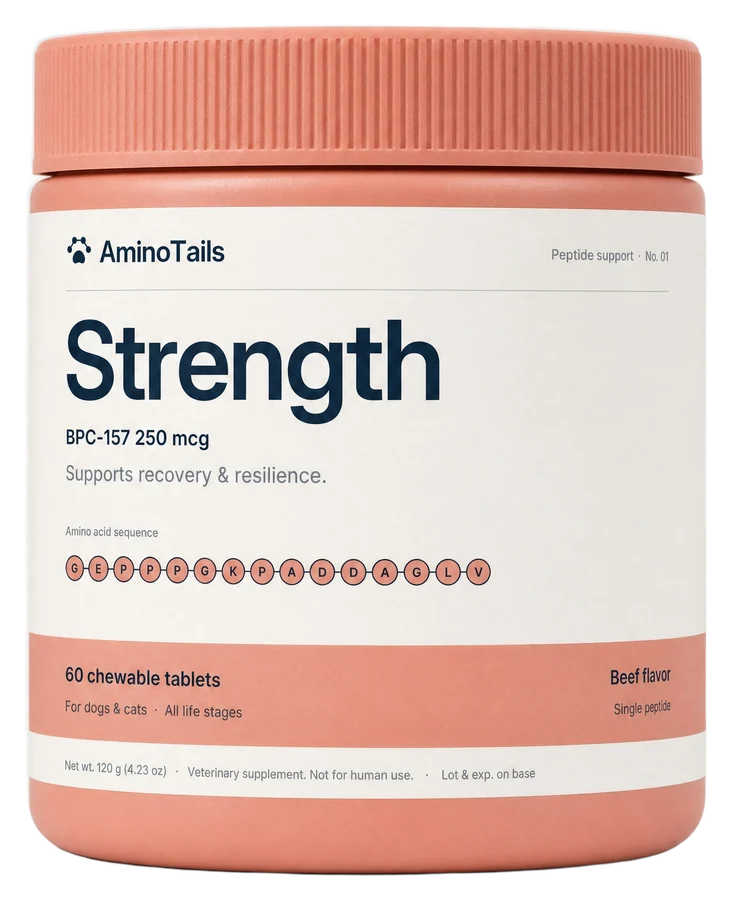
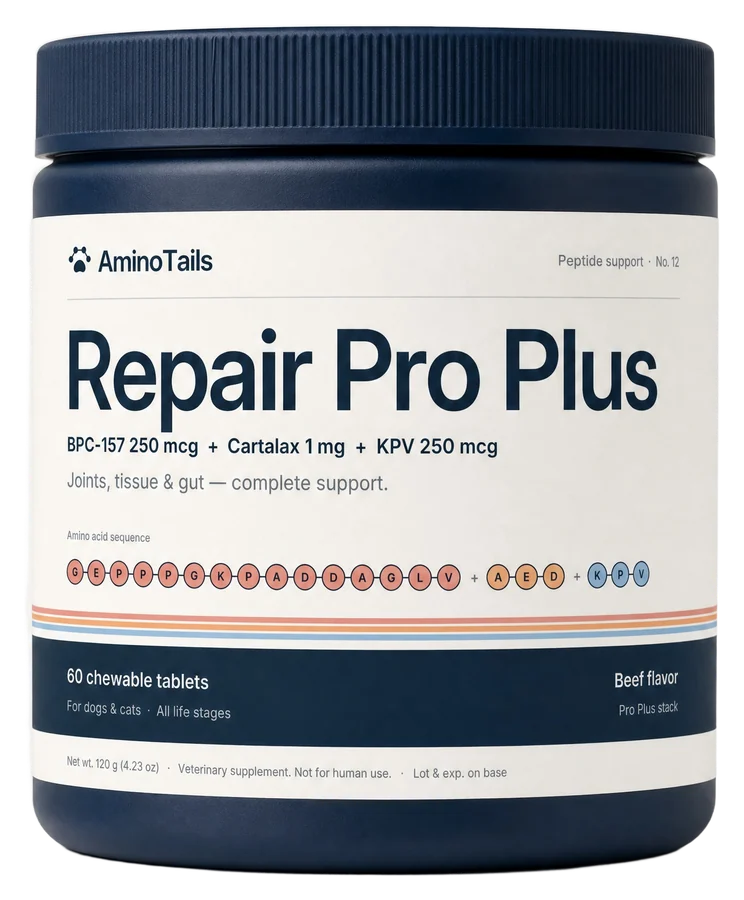
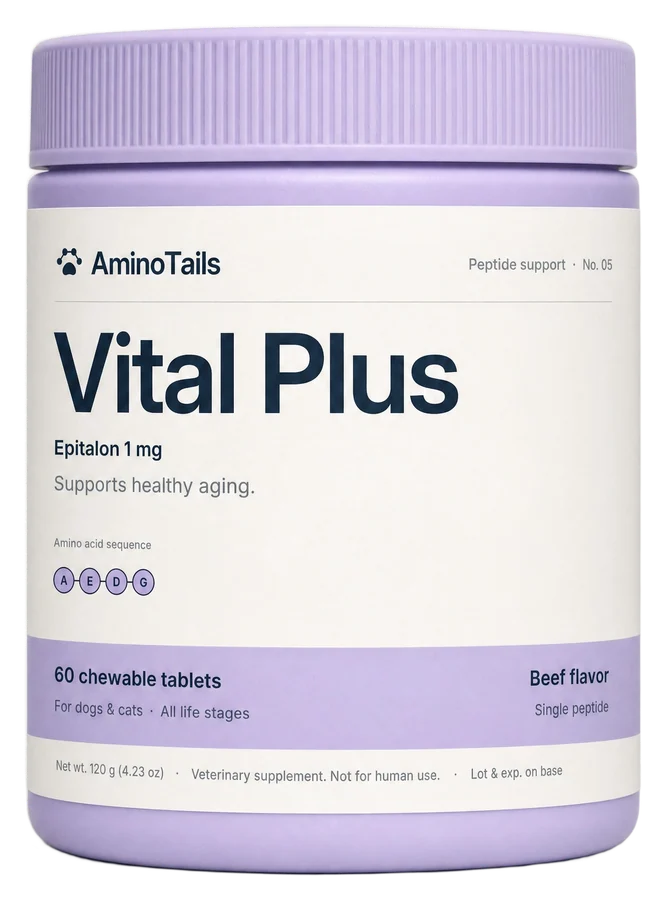
Every AminoTails Plus formula carries a separate feline chart on the label. For most adult cats that means half a tablet a day*, adjusted by weight. Our Pro and Pro Plus stacks are formulated for dogs only.
The picky-eater playbook
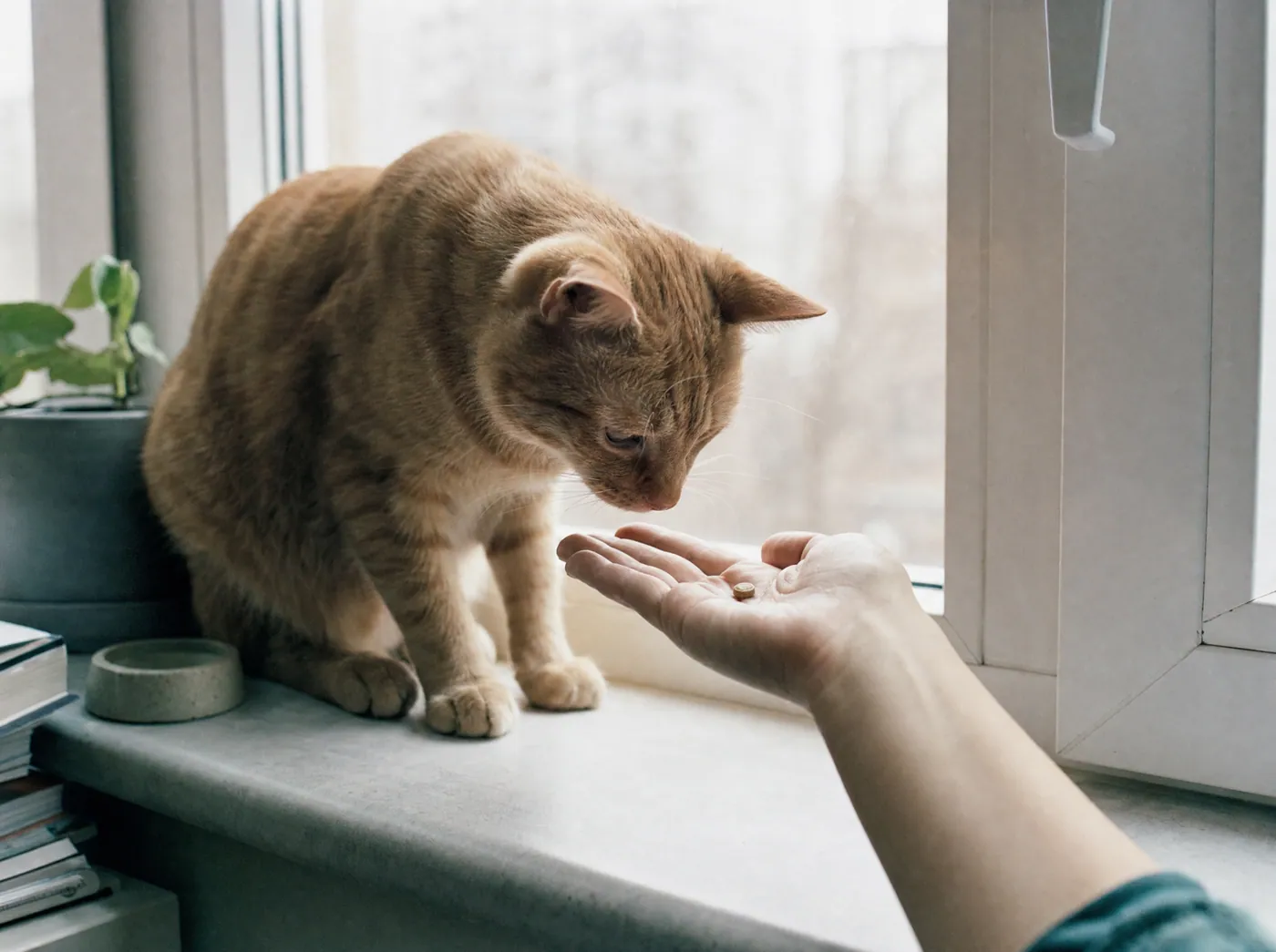
- Start as a treat, not hidden in dinner — a cat who finds something odd in their bowl may go off the bowl.
- Crumble it over a spoonful of wet food they already love.
- Warm the food slightly; aroma matters more to cats than flavor.
- Same time, same place. Cats like a ritual.
Cats are not small dogs. They’d like that on the record.
Signs worth a vet visit
Changes in grooming, litter-box habits, appetite or hiding behavior are often the first and only signs a cat gives. Any of them, especially in an older cat, are worth a check-up.
This article is for general education and isn’t veterinary advice. Every pet is different — talk to your veterinarian before starting a supplement, especially if your pet is pregnant, on medication or managing a health condition.
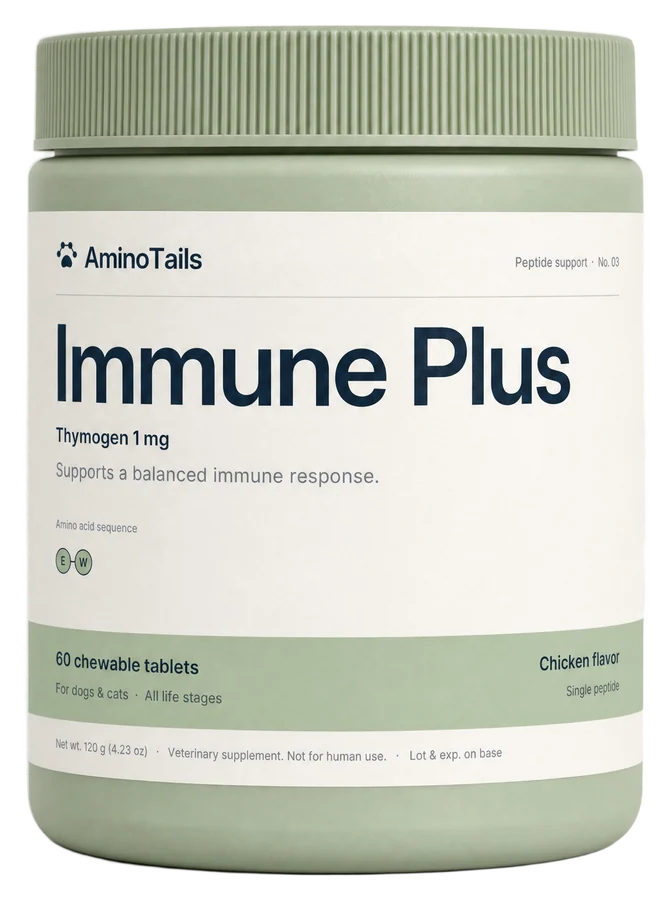
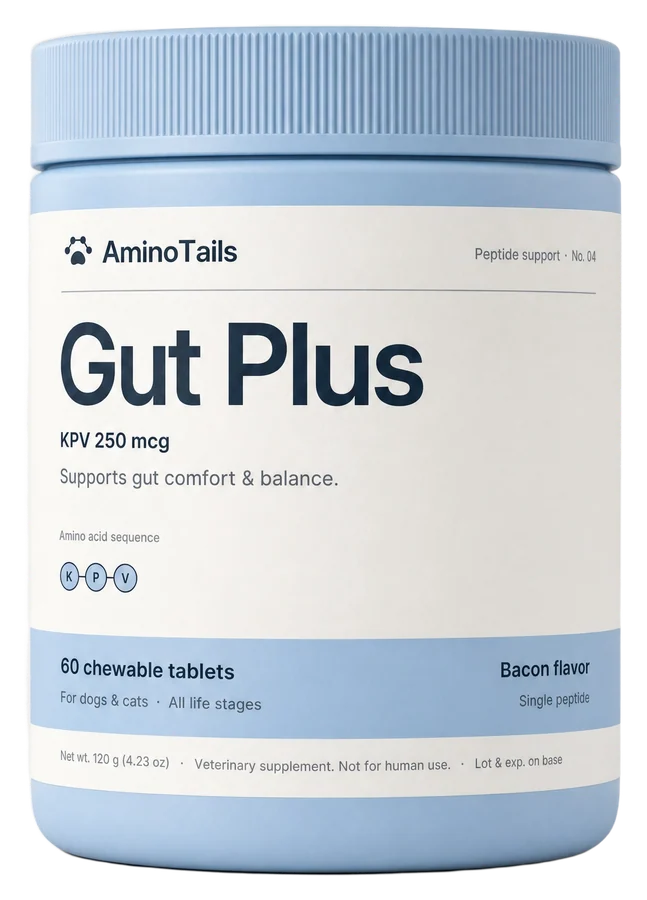
Formulas in this story
Shop all formulas
Keep reading
All stories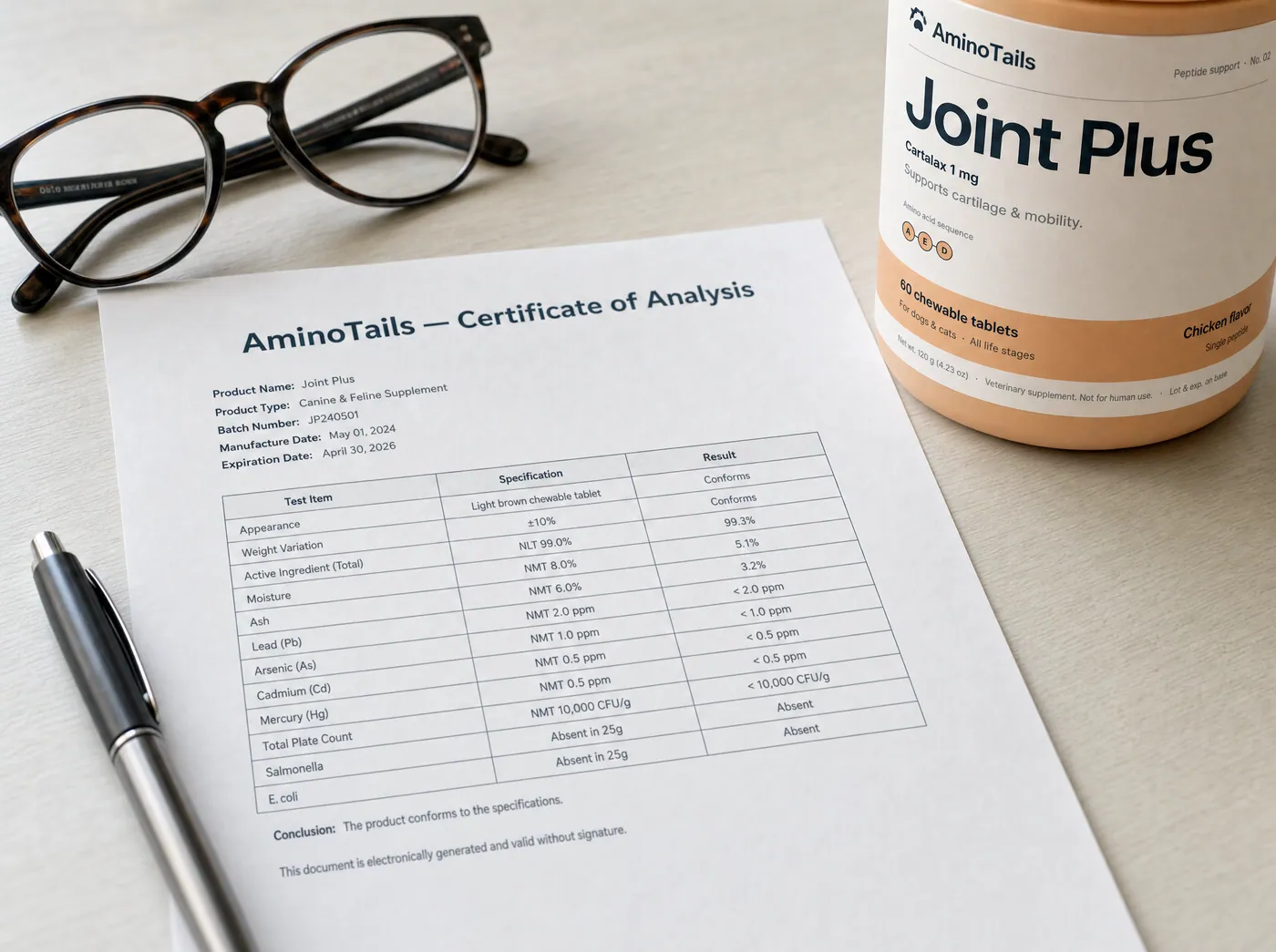
How to read a certificate of analysis
Identity, purity, contaminants: a five-minute guide to the document every supplement should come with.
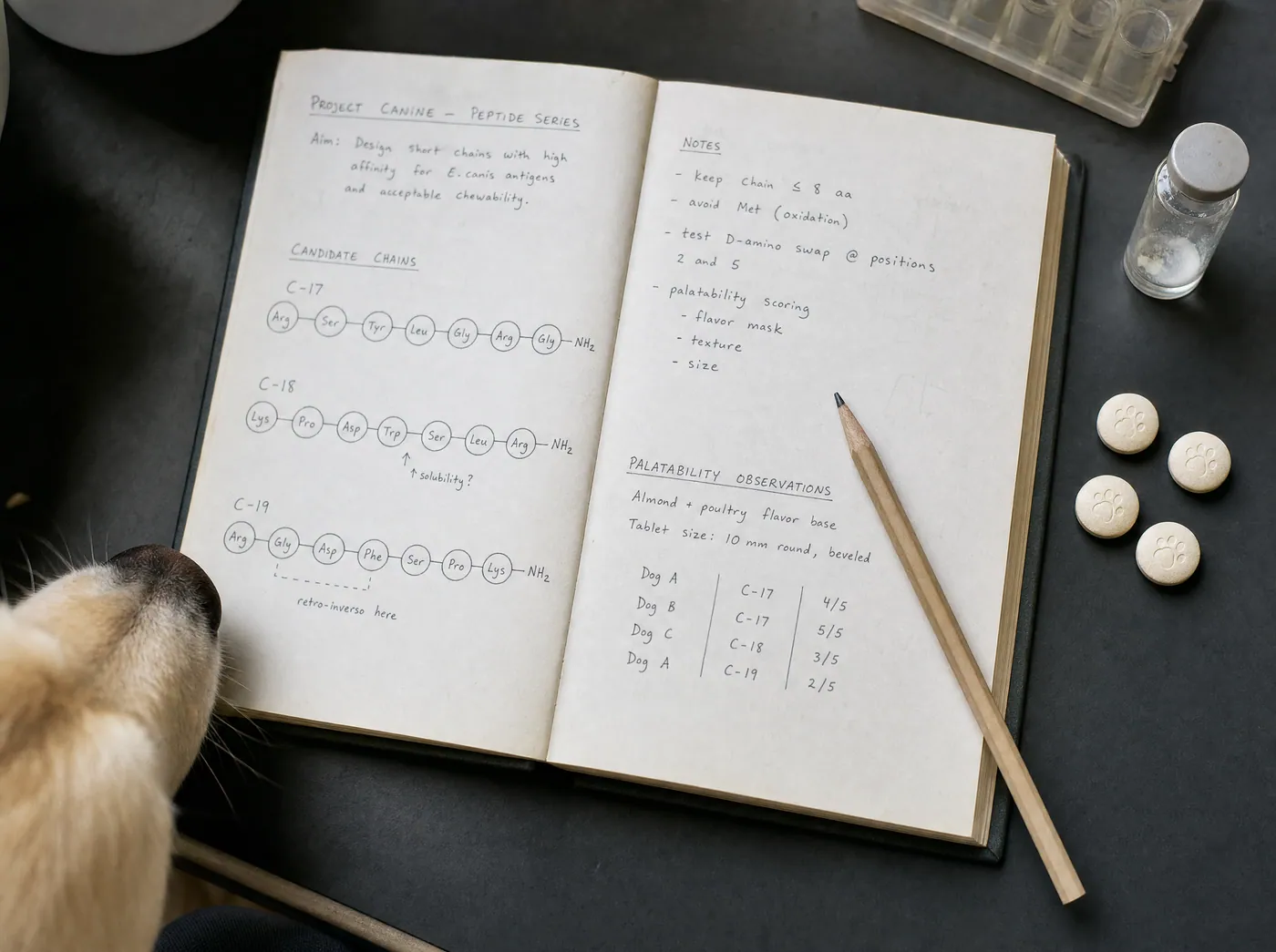
What are peptides, really?
Short chains of amino acids, long list of jobs. A plain-language guide to the molecules behind AminoTails.
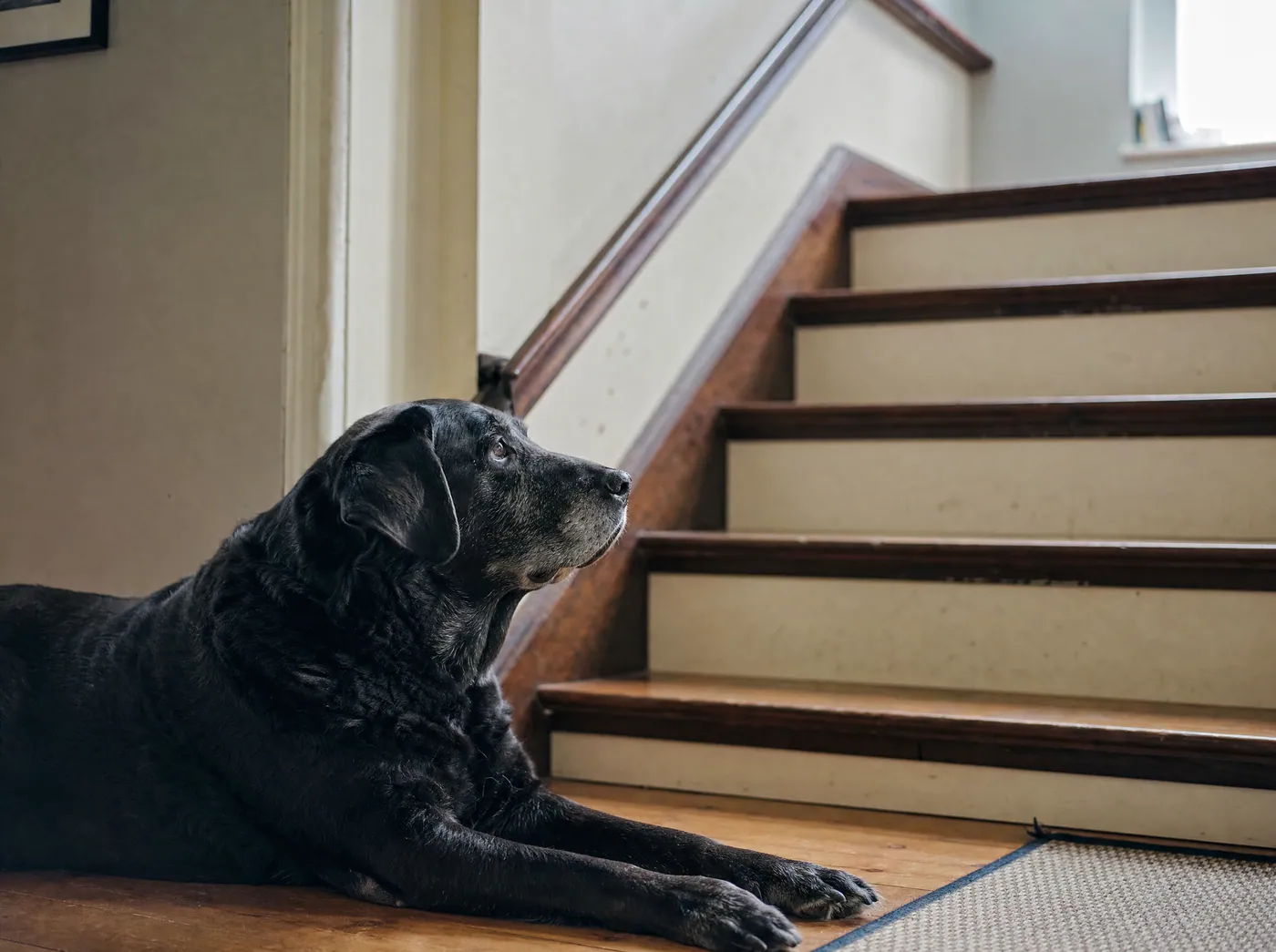
The stairs are a test: reading your senior dog’s joints
Small changes in how they rise, climb and settle say a lot. Here’s what to watch — and what to ask your vet.