Identity, purity, contaminants: a five-minute guide to the document every supplement should come with.
By the AminoTails Science Team · Reviewed by our veterinary advisory board* · June 2026
Key takeaways
A certificate of analysis belongs to one lot — match the number on the jar.
Look for three things: identity, purity and contaminants.
Independent, accredited labs beat in-house testing every time.
What a COA is
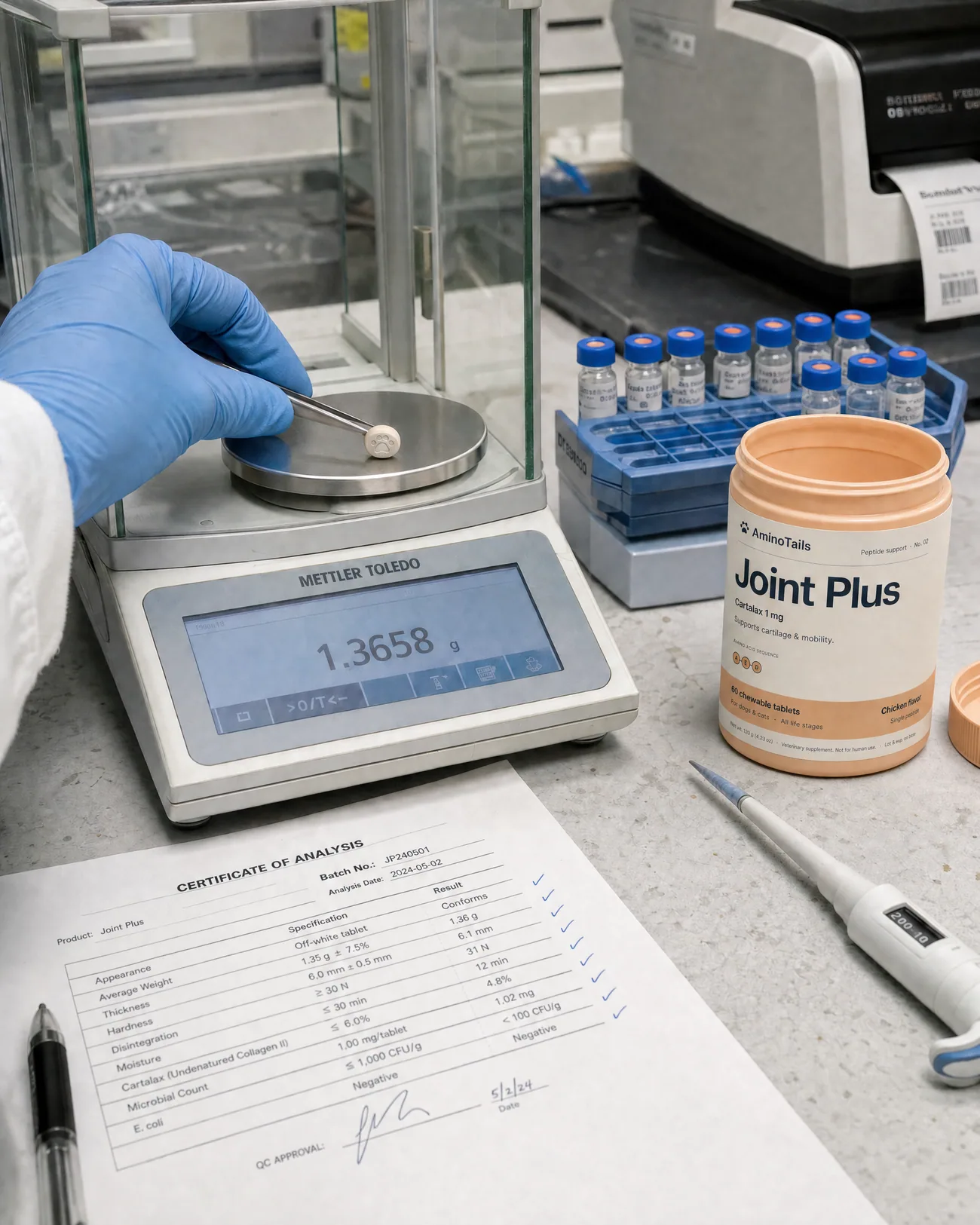
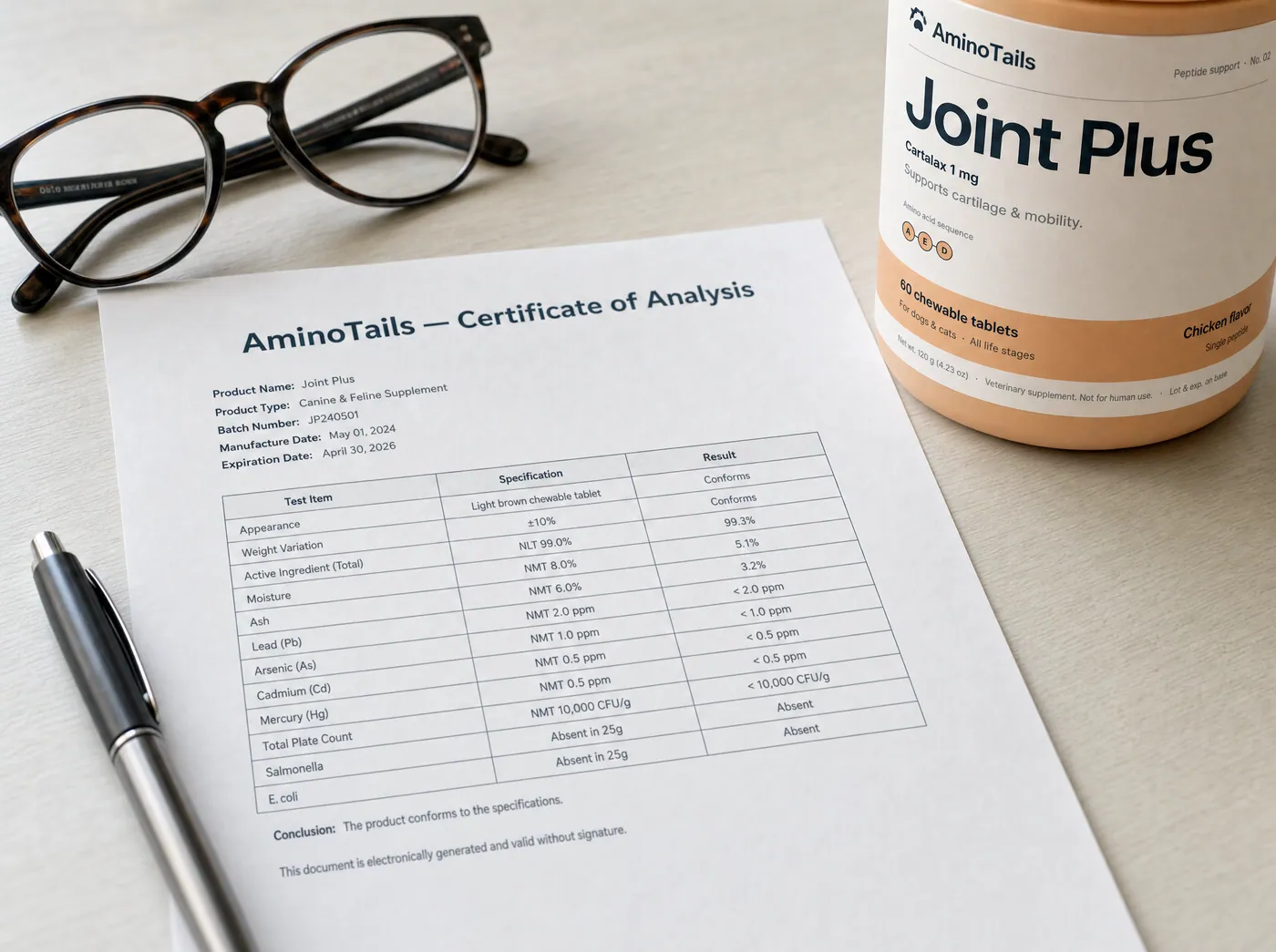
A certificate of analysis is a lab report for a single production lot. It lists each test performed, the method used, the specification the product had to meet, and the result. If a brand can’t show you one, that tells you something.
1. Match the lot
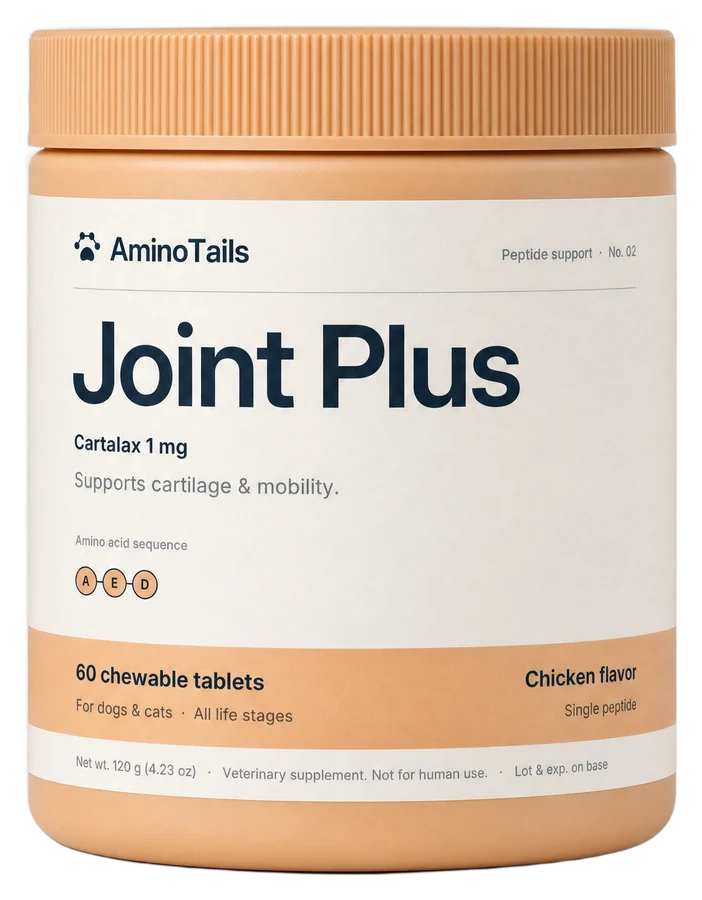
Find the lot number on the base of your jar and make sure it matches the certificate. A COA for a different lot — or a “typical” COA with no lot at all — says nothing about what’s in your hands.
Certificate of analysis
Joint Plus
LotAT-2611-JNT
Test
Method
Specification
Result
Cartalax identity
HPLC-MS
Conforms
Conforms
Peptide purity
HPLC
≥ 98.0%
99.3%
Content per chew
HPLC
90–110% of label
101.4%
Heavy metals
ICP-MS
Within limits
Pass
Microbial
USP 2021/2022
Within limits
Pass
2. Identity
Is the peptide actually what the label says? Identity is usually confirmed by HPLC paired with mass spectrometry, which checks both how the molecule behaves and its exact mass. The result should read “conforms.”
3. Purity and content
Purity, measured by HPLC, tells you how much of the peptide material is the intended peptide rather than fragments or by-products. We release lots at 98% or higher*. Content — sometimes called assay — confirms each chew carries the amount on the label, within a tight range.
4. Contaminants
Heavy metals (lead, arsenic, cadmium, mercury) are tested by ICP-MS. Microbial testing screens for bacteria, yeast and mold. Injectable products should also show sterility and endotoxin results.
A “typical” certificate is a brochure, not a test result.
5. Who did the testing
Look for an independent laboratory accredited to ISO/IEC 17025, named on the certificate, with a test date. Red flags: no lab named, no date, results without methods, or specifications that simply say “pass.”
This article is for general education and isn’t veterinary advice. Every pet is different — talk to your veterinarian before starting a supplement, especially if your pet is pregnant, on medication or managing a health condition.